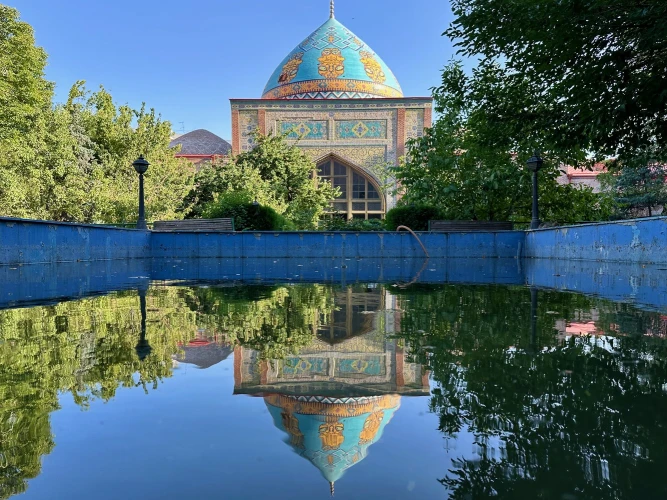

Blue Mosque, Yerevan
An active mosque and shaded courtyard preserving a distinct layer of Yerevan’s Iranian-period architecture


A few steps below the busy traffic of Mashtots Avenue, the courtyard of the Blue Mosque unexpectedly changes the sound of Yerevan. Trees, a pool and brick arcades create the feeling of an enclosed garden, while the blue dome reflected in water explains the name better than any sign. Beginning in the courtyard helps you read the mosque as a complete complex rather than a single facade for photographs.
Look for three layers in the courtyard
The first is the repeating rhythm of brick: arches, recesses and narrow passages. The second is the turquoise and blue tilework, concentrated around the prayer-hall facade, dome and inscriptions. The third is the planting, which does more than decorate; it separates the interior world from the avenue outside. Built in the 18th century, the complex is one of the most significant surviving structures from Yerevan’s Iranian period.
The rules change when you enter
This is an active religious site. Clothing should cover shoulders and knees, shoes must be removed before entering the prayer hall, and people should not be photographed without permission. During prayers or events, some interior spaces may be unavailable to visitors. If uncertain, ask a member of staff and follow signs on site. A quiet courtyard walk with time for architectural details usually takes 45-60 minutes.
Place it within a city route
The mosque’s past also includes a museum chapter: during the Soviet period it housed Yerevan history and natural-science collections. The Visit Yerevan portal gives a concise chronology, and the Yerevan municipality provides further city context. Afterwards, walk to Republic Square, browse the Vernissage Market, or choose another stop from GAVAG’s Armenia attractions.
Frequently asked questions
Book a private transfer
Add this stop to your trip, see the full route on the map, and compare offers from local drivers.