
Ancient Dvin
An open archaeological site where the foundations of a once powerful medieval capital still shape the Ararat plain


Ancient Dvin is not a site to visit only for “ruins.” It is a place to imagine scale: a royal city, a religious center, workshops, walls and trade routes spread across what now looks like an open archaeological field near Hnaberd and Verin Dvin. If you have already visited Khor Virap, Dvin feels like the quieter next chapter: less polished scenery, more historical depth.
How the city began
Dvin grew on the site of an older settlement and fortified hill. Historical sources date its foundation to 335, under King Khosrov III Kotak; his son Tiran later moved the royal residence here. After the fall of the Arsacid kingdom, Dvin remained important as a Sasanian administrative seat and later as a major center under Arab rule. World History Encyclopedia describes Dvin as a defensible city on a natural promontory that had already become a thriving capital by the 5th century in its overview.
What remains on the ground
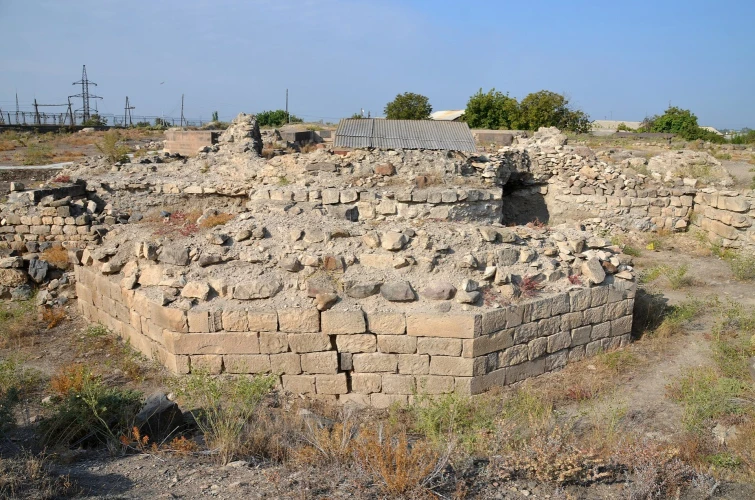
The excavated areas reveal foundations linked with the great cathedral, the Catholicosal residence and city structures. The walls are low, so look slowly: the interest is not in a complete building, but in the footprint. Do not climb the masonry or move stones. At an archaeological site, even a small displacement can damage the meaning of an excavation.
Attacks, earthquakes and decline
Dvin’s story was not peaceful growth alone. In 640-642 the city was captured and plundered during Arab campaigns, then became one of the centers of the province of Arminiya. A powerful earthquake in 893 caused severe destruction. Later the city passed through different powers, and after the Mongol attack of 1236 urban life was effectively broken. TourPoint presents Dvin’s ruins as a broad, lightly developed archaeological site preserving layers of a 4th-13th-century capital in its description.
How to place it in a day route
Dvin fits well into an Ararat history day: start with the ruins, continue to Khor Virap, and if you want an older urban layer, compare it with Erebuni Fortress. For a longer route, add Garni Temple or Geghard Monastery in the Kotayk direction.
Frequently asked questions
Book a private transfer
Add this stop to your trip, see the full route on the map, and compare offers from local drivers.