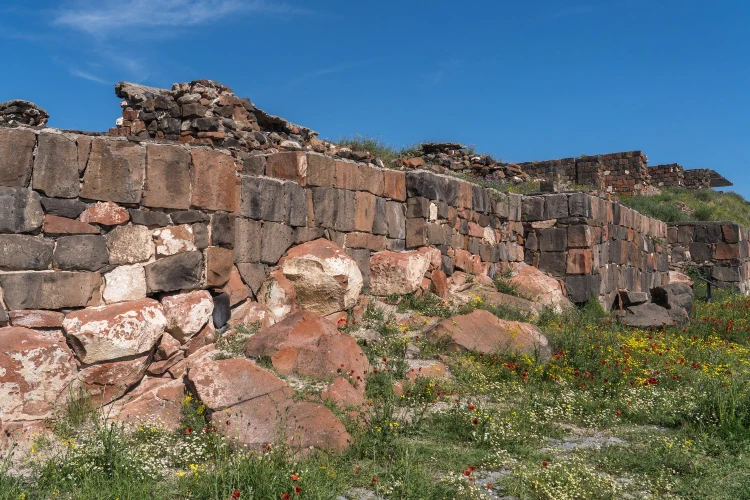

Erebuni Fortress, Yerevan
A Urartian citadel where one cuneiform text anchors Yerevan’s documented beginning


The clearest way to understand Erebuni Fortress is to begin in the museum and then climb Arin Berd hill. At the foot, excavated objects establish the context; above, the same story becomes a plan drawn by surviving walls. In this order, low stone courses turn into recognisable spaces: entrance, palace, columned hall, temple and storage rooms.
One inscription for the beginning of a city
King Argishti I’s cuneiform text records the foundation of the fortress-city in 782 BCE. It is therefore often described as Yerevan’s birth certificate. You do not need to read cuneiform to grasp its significance: a state declaration preserved in stone gives the city a precise documented date. In the museum, find the original object and interpretation; on the hill, look for the setting in which such a message announced royal authority.
The walls were not only defensive
The hilltop position had military value, but Erebuni was also an administrative and ceremonial centre. Mud-brick walls rose above stone foundations, rooms carried colourful paintings, and large jars stored supplies. As you walk, follow wall lines and signs rather than treating every low ruin as identical. Do not climb fragile masonry or touch surviving plaster. The hill is exposed and hot in summer, so carry water, sun protection and shoes suitable for uneven ground.
From the old citadel back to modern Yerevan
Allow 1.5-2.5 hours for both museum and fortress. Verify current access on the museum-reserve’s official page, with a short visitor summary also available from Armenia Travel. Afterwards, compare ancient written culture at the Matenadaran, return to Republic Square, or select the next stop from GAVAG’s Armenia attractions.
Frequently asked questions
Book a private transfer
Add this stop to your trip, see the full route on the map, and compare offers from local drivers.