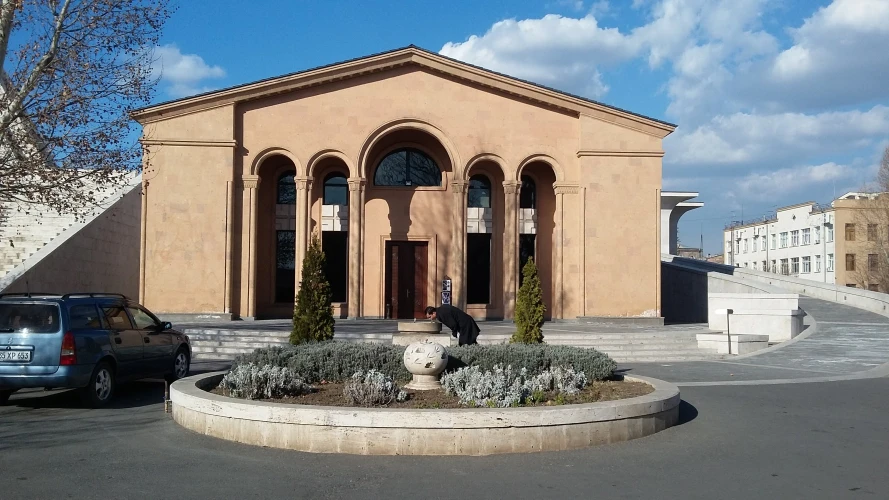

Komitas Museum-Institute in Yerevan
Eight thematic halls where listening connects Komitas’s biography, fieldwork, notation and performance


At the Komitas Museum-Institute, begin without reading a label. Listen to one recording for a minute and separate melody, verbal accent and silence. Only then check its date and explanation. This order presents Komitas not as a distant monument but as a musician who listened, documented and transformed what he heard.
Halls 1–2: use biography as a map
Chronology and testimony from contemporaries provide orientation, but do not memorize every date. Choose three anchors: education, field collection and performance. In later halls, connect each manuscript or recording to one point on that map.
Halls 3–4: from finding a song to notation
Komitas did not simply “take” folk melodies. He listened, compared, selected and notated while preserving traces of performing variants. Ask whether an item is an initial field note, an arrangement, a publication or a later performance. Do not treat composer, collector and arranger as interchangeable labels.
Halls 5–7: listen through different roles
The same figure appears as composer, scholar of sacred music, singer and choirmaster. Hear one excerpt without reading, another beside notation or translation, and a third for the historical texture of its recorded sound. A personal object such as the inkstand connects manuscript labour to public performance, but cannot narrate an entire life alone.
Hall 8: legacy is not a sealed display case
The final hall follows responses created after Komitas. “Institute” matters: the organisation also supports a library, research, concerts and temporary programmes. The official permanent exhibition page outlines all eight themes; calculate concert or event time separately from the museum visit.
Hours, access and the next stop
The official visitor page currently lists 10:00-16:30, Friday to 19:30, closed Wednesday; verify last admission and tickets. A long ramp is visible at the building, but confirm any specific assistance in advance. Continue manuscript culture at the Matenadaran, a music day at the Aram Khachaturian Concert Hall, and visual responses to Armenian culture at the National Gallery. Find more stops in GAVAG’s Yerevan guide.
Frequently asked questions
Book a private transfer
Add this stop to your trip, see the full route on the map, and compare offers from local drivers.