
Megerian Carpet Factory
A working craft complex where warp, hand-tied knots, dyed wool and finishing turn a chart into a carpet


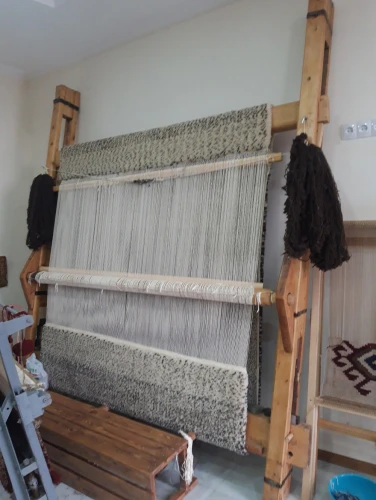
At Megerian Carpet Factory, do not begin with a finished rug. Find the bare warp first, then follow one square of the design chart until it becomes a coloured knot. This page focuses on production labour; the separate museum guide covers the historic collection at the same address.
The warp supports what the finished surface hides
Even tension across a vertical loom controls dimensions and keeps the rug square. Ask which fibres form the warp and pile, how knot density is calculated, and why a drifting edge signals a problem. Never touch a working loom without the weaver’s permission: even a small pull interferes with tension and concentration.
A single knot means little; a controlled row builds the surface
The weaver reads a chart, selects yarn, ties it around warp threads, cuts it, and packs each row with a weft. Repetition does not remove judgement: a border corner and colour transition still require constant checking. Rather than filming the whole room, track one small motif from its first knot to the next completed row.
Colour is a material decision, not only a name
The company’s history highlights natural dye traditions, yet ask about the actual fibre and dye used in the piece before you; different collections may follow different specifications. Useful questions concern dye consistency, washing, drying and the moment the pile is clipped. Those finishing stages reveal the pattern and correct irregular height.
A pattern can leave the rug
Carpet geometry can migrate into mosaic, jewellery or fabric, but each material changes the line. Megerian’s public mosaic in Yerevan is a useful comparison: look for the border and central field, then notice which small woven details had to be enlarged or simplified in stone.
Factory, museum and showroom answer different questions
The workshop explains making, the museum interprets older rugs, and the showroom presents finished goods. Confirm a visit through the official Megerian site or contact channel, asking about language, fee, active-workshop access and photography. If buying, request dimensions, materials, origin, care guidance and documentation. A demonstration never creates an obligation to purchase.
Continue the textile trail without search overlap
Use the separate Megerian Carpet Museum guide for historic pieces, compare independent sellers at Vernissage, and see the urban design context at Swan Lake. Browse more Yerevan attractions. General reservation advice also appears in the official FAQ.
Frequently asked questions
Book a private transfer
Add this stop to your trip, see the full route on the map, and compare offers from local drivers.