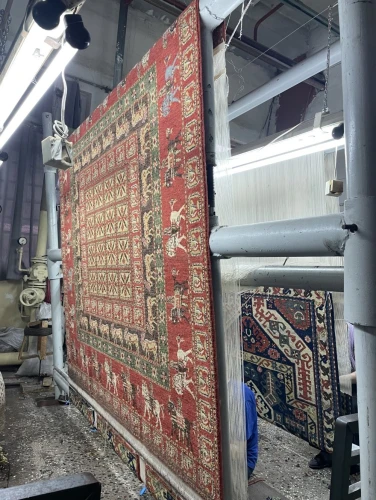

Megerian Carpet Museum in Yerevan
A museum, working craft space and showroom where a carpet is understood through both history and process


At the Megerian Carpet Museum, treat a rug not as one decorative picture but as a sequence of decisions. Begin at the border, find the repeating rhythm, and only then move toward the central field. Colour, knot and worn areas become evidence of work and history rather than surface decoration.
First look: let the border set the reading direction
Compare repetitions of one motif. Small variations can reveal the hand behind the textile. Avoid assigning a fixed symbolic meaning to every shape: period, region and commission may change how a form was used. Ask the guide for provenance, dating and which parts of an interpretation are documented.
Next layer: wool, colour and knot
During the production demonstration, follow the chain from design and yarn to the double knot, compression of each row and trimming of the pile. A finished square metre represents many hours, so do not touch a working loom, pull yarn or interrupt a weaver for a photograph. Ask how natural and modern dyes differ and where restoration ends and new weaving begins.
Museum, workshop and showroom are three distinct spaces
The complex combines a historical collection, an active craft environment and a showroom. Viewing a museum piece does not oblige you to buy. If a rug interests you, separately confirm material, dimensions, place of production, certificate, shipping and return conditions. The Homo Faber Guide also describes the collection and its 2014 museum opening.
One confirmation prevents a vague visit
Number 9 Madoyan Street lies outside the usual central walking circuit. Confirm the day, language, start time, fee and group size in advance. The official Megerian FAQ recommends reservations and describes a typical 30-40-minute tour; allow extra time to examine the museum. Ask where photography is permitted and whether flash is allowed.
Continue the cultural thread
Compare regional material at the History Museum of Armenia, connect the craft to urban life at the Yerevan History Museum, and see present-day handmade work at the Vernissage Market. Build a broader route from GAVAG’s Armenia attractions guide.
Frequently asked questions
Book a private transfer
Add this stop to your trip, see the full route on the map, and compare offers from local drivers.