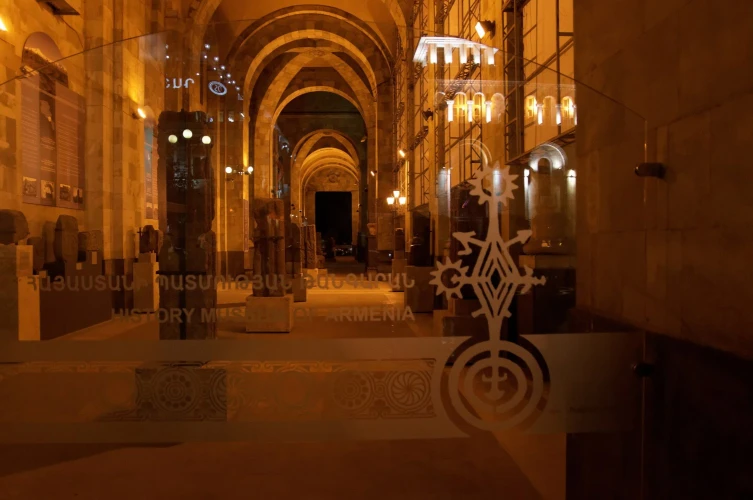

History Museum of Armenia
A national collection read through material, movement and the choices people left behind


Trying to see everything in the History Museum of Armenia usually ends in display-case fatigue. The collection numbers around 400,000 objects, so choose three questions instead: What is an object made from? How was it moved or used? What does it reveal about its maker’s choices? This simple method connects distant periods into one readable route.
First stop: when wood survives millennia
At the 15th–14th century BCE carriage from Lchashen, begin with construction: wheels, axle and wooden joints. Then read the label explaining its archaeological context. The vehicle is more than transport; producing it required knowledge of timber, tools and organised labour. A spectacular exhibit thus becomes evidence of Bronze Age technology, not merely very old wood.
Second stop: small scale, dense information
The bronze bird figures from Lchashen offer the opposite scale. Examine their bases, perforations, wear and simplified animal forms. Separate what you can actually observe from the interpretation supplied by the label. This habit is useful around jewellery, seals and ritual objects: attractive design matters, but material, findspot and traces of use often tell a richer story.
Choose the third stop yourself
Make it one Urartian inscription, coin or ethnographic object. On a coin, look for signs of authority; in a textile, study technique; in a document, notice language and intended reader. Check temporary exhibitions too, because available galleries can change. Rest your eyes every fifteen minutes and resist reading every caption. Two objects understood well often remain clearer than fifty hurried photographs.
Connect the museum to the square outside
Allow 2-3 hours. Verify opening times and last admission on the official visitor page, and explore the collection structure in the museum’s collection concept. Afterwards, read Republic Square itself, compare the capital’s story at the Yerevan History Museum, and continue written history at Erebuni or the Matenadaran.
Frequently asked questions
Book a private transfer
Add this stop to your trip, see the full route on the map, and compare offers from local drivers.