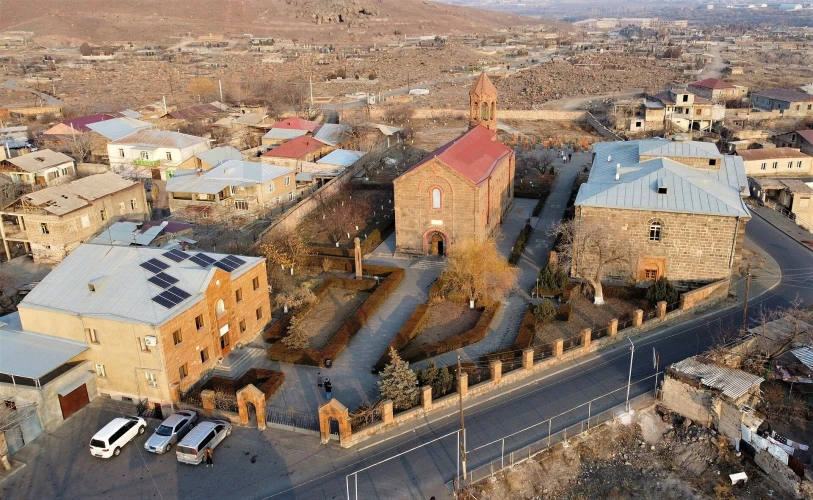

Oshakan Saint Mesrop Mashtots Church
An active Armenian Apostolic church built above the tomb of the creator of the Armenian alphabet


A visit to Saint Mesrop Mashtots Church in Oshakan is not a conventional museum stop. The memory of the creator of the Armenian alphabet, an active place of worship and two very different building periods meet here. After Mashtots was buried at Oshakan, Vahan Amatuni built a chapel over the grave in 443. The present basilica rose around the shrine in 1875-1879 under Catholicos Gevorg IV.
Begin in the courtyard and find the axis
Do not rush directly to the tomb. From the yard distinguish the long rectangular church, the bell tower at the east end and the historic cemetery around the complex. The cylindrical tower added in 1884 is not a conventional western belfry; its position helps explain why the visitor’s path continues toward the sanctuary.
Read the interior as several dates
The stone basilica belongs to the late 19th century, while the sacred origin reaches back to the 5th. The murals added in the 1960s form another layer, presenting Mashtots, Catholicos Sahak Partev, King Vramshapuh and figures associated with translation. Do not assign every visible element to one period. Check the photography rules displayed on site and avoid flash.
Change pace before entering the tomb
The small chamber beneath the altar marks the burial place of Mesrop Mashtots; it is not an exhibition room. Descend one group at a time, speak quietly and keep the exit clear. View the sculpture and inscribed slab without touching them. Place flowers or candles only where permitted. If a service or pilgrim group is present, waiting is part of a respectful visit.
Continue the alphabet story in Yerevan
Oshakan explains the memorial and pilgrimage tradition; the logical next stop for manuscript culture is the Matenadaran in Yerevan. The church’s active status and diocesan contact appear on the Mother See’s Diocese of Aragatsotn page, while its official monument record is listed through ARLIS.
Build a short Oshakan-Ashtarak route
Continue with one architectural and one urban stop in Ashtarak: Karmravor Church presents a compact medieval cross-domed form, while Ashtarak Old Bridge reveals the city’s relationship with Kasagh Gorge. Find more choices in the nearby attractions guide.
Frequently asked questions
Book a private transfer
Add this stop to your trip, see the full route on the map, and compare offers from local drivers.