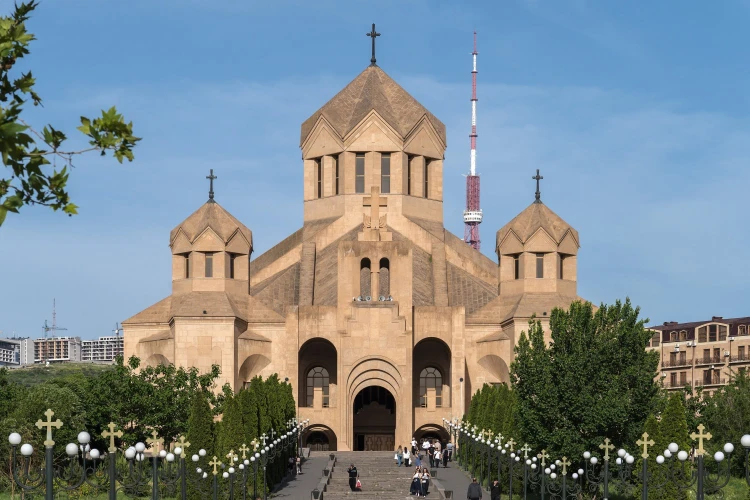

Saint Gregory the Illuminator Cathedral
A modern mother cathedral built for a national anniversary and still lived through active worship


Saint Gregory the Illuminator Cathedral is both a landmark and an active church. Begin outside: step back across the plaza to read the central dome, tall bell structures and the smaller chapels as one composition. Designed by Stepan Kyurkchyan, the complex was built for the 1700th anniversary of Armenia’s adoption of Christianity as the state religion. Its foundation stone was laid on 7 April 1997, and the cathedral was consecrated on 23 September 2001.
Read the three-part complex from the plaza
The main cathedral is accompanied by chapels dedicated to King Trdat III and Queen Ashkhen, figures associated with Armenia’s Christian conversion. The western narthex, open forecourt and separate bell tower complete the ensemble. Unlike a medieval church enlarged over centuries, this complex was conceived as one project. The official Visit Yerevan description records its architect, engineers and donors. For comparison with a surviving medieval church in the city centre, see Katoghike Church.
The relics are in the narthex
Relics of Saint Gregory the Illuminator, brought from the Armenian church of San Gregorio Armeno in Naples, are enshrined in the cathedral’s narthex. This explains why the building is not only an anniversary monument but also a place of pilgrimage. The dates and the location of the relics are documented by the Mother See of Holy Etchmiadzin.
Enter as a guest, not only a photographer
Pause at the door and check whether a service, baptism or funeral is underway. Dress with shoulders and knees covered, silence the phone and avoid crossing directly in front of worshippers. During prayer, remain at the rear or side. Photography may be restricted, especially during ceremonies; ask before using a camera and never use flash.
Let scale guide the eye
Inside, follow the rise of the stone piers toward the dome, then bring your attention back to the altar, chandeliers and daylight. The relatively restrained surfaces make proportion and light more important than dense decoration. Speak quietly and do not touch icons, liturgical objects or candles belonging to others. This is living sacred space, not a silent exhibition.
Plan the visit around worship
Allow 45-75 minutes and expect access to change on feast days. The Armenian Church page explains the cathedral’s history; Visit Yerevan adds architectural context. Afterwards walk to Vernissage, continue to Republic Square, or choose from GAVAG’s Armenia attractions.
Frequently asked questions
Book a private transfer
Add this stop to your trip, see the full route on the map, and compare offers from local drivers.