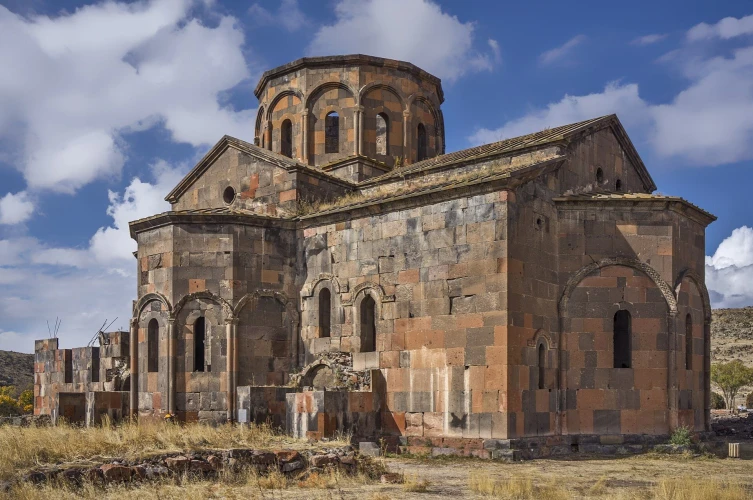

Talin Cathedral
A 7th-century three-nave, three-apse domed basilica with an open drum and exceptionally rich facade carving


Talin Cathedral is not one building but a compact timeline. The official record lists the 7th-century Great Katoghike, foundations of an earlier single-nave basilica, palace remains and a cemetery. Begin by identifying each layer. Construction of the Katoghike is attributed to the Kamsarakan princes, though no definitive building inscription survives.
Stop 1: find three apses outside
At the east, the main and two side apses project as five-sided volumes. This three-apse design distinguishes the cathedral from a simple rectangular basilica. Stay on clear ground: graves, exposed foundations and uneven edges surround the church.
Stop 2: count three aisles inside
Two rows of piers divide a tall, broad central nave from vaulted side aisles. Stand on the main axis, then step sideways to understand how one great hall was both unified and spatially divided.
Stop 3: read the open drum as a sequence
Pendentives carried the transition from the square bay to the drum; small squinches linked the drum to the former dome. Look for these two stages overhead. Never climb piers or fallen masonry: the complete structural logic is visible from the floor.
Stop 4: inspect the facade with your eyes
Window crowns, cornices, interlace and grape clusters are unusually rich for the restrained language of early medieval monuments. Notice alternating dark and reddish tuff. Do not touch carvings or lean equipment against them; side light reveals the relief without intervention.
Stops 5 and 6: early basilica and cemetery
Foundations about five metres from the north apse probably belong to a 5th-century single-nave church. The northern and western cemetery contains four-sided stelae, inscribed tombstones and khachkars. Follow existing paths and move nothing. Read the full complex entry in the official monument database and the strengthening project on the heritage service page. Current conditions may differ from older photographs.
Continue east in reverse chronology
Travel from Talin to 7th-century Aruch Cathedral, then to Oshakan’s Mashtots Church and active Mughni Saint Gevorg. More options are in the nearby attractions guide.
Frequently asked questions
Book a private transfer
Add this stop to your trip, see the full route on the map, and compare offers from local drivers.