
Metsamor Historical Site
A multi-period fortified settlement known for metallurgy, burials and continuing excavation


Metsamor archaeological site lies beside Taronik village in Armenia’s Armavir Province. Excavations begun in 1965 have uncovered a fortified settlement, residential quarters, production areas, sanctuaries and a large cemetery. The earliest occupation belongs to the Chalcolithic period; the settlement expanded during the Bronze and Iron Ages, became part of the kingdom of Urartu in the eighth century BC, and remained inhabited in later periods up to the seventeenth century.
The fortified settlement and metal production
Metsamor is especially important for evidence of early metallurgy. Archaeologists identified furnaces, slag, moulds and tools connected with copper and bronze production. The layout of the production zone is not always easy to recognise among the exposed remains, and the site plan or a museum guide helps distinguish its different structures. Current excavation results are published by the Armenian-Polish archaeological mission.
The walls on the hill belong to different periods. Differences in masonry and room layout show that the settlement was rebuilt repeatedly over time. Rock-cut basins and carved signs have sometimes been described in popular accounts as an ancient observatory. Researchers continue to debate whether these features had ritual, practical or astronomical functions.
What the museum displays
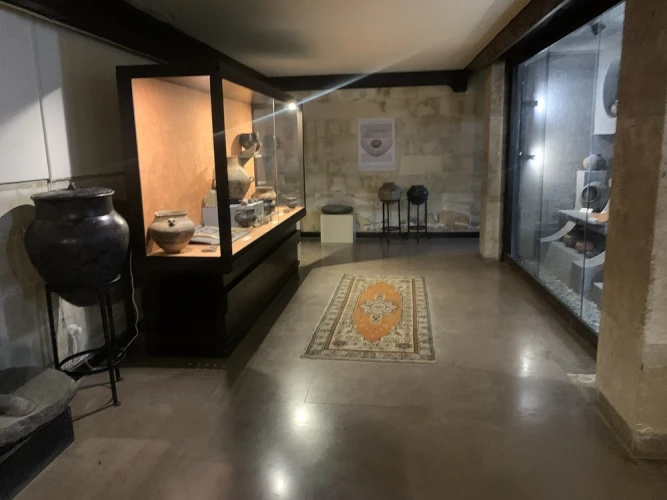
The museum-reserve opened in 1968 and holds more than 27,000 objects. Pottery, weapons, jewellery, tools and burial finds document everyday life, crafts and burial customs at the settlement. Notable pieces include an agate frog-shaped weight associated with the Babylonian ruler Ulam-Burariash and a sardonyx seal linked to Kurigalzu, evidence that Metsamor participated in long-distance exchange. Check tickets and current hours on the official museum page.
Visit duration and nearby sites
Allow 1.5–2.5 hours for the museum and outdoor ruins. Wear closed shoes because paths cross uneven stone and exposed soil. Combine Metsamor with Sardarapat Memorial or continue toward Etchmiadzin Cathedral. Travellers arriving at Zvartnots can use the Yerevan airport transfer page to arrange onward travel.
Frequently asked questions
Book a private transfer
Add this stop to your trip, see the full route on the map, and compare offers from local drivers.