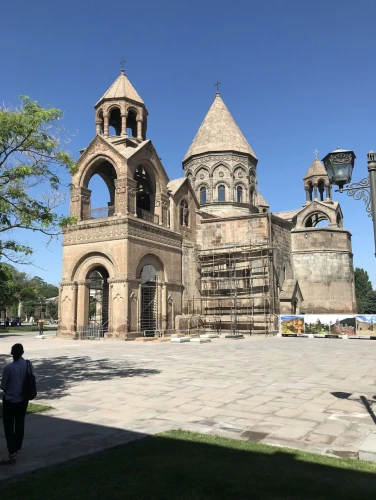

Etchmiadzin Cathedral
The spiritual centre of the Armenian Apostolic Church, shaped by seventeen centuries of rebuilding and worship


Etchmiadzin Cathedral is the mother church of the Armenian Apostolic Church and the seat of the Catholicos of All Armenians. Daily prayers, liturgies and major ceremonies take place here, so a visit combines history and architecture with the life of an active sanctuary. Visitors are welcome, but the rhythm of worship always comes first.
The foundation and the meaning of Etchmiadzin
According to Armenian church tradition, the first cathedral was founded in the early fourth century, after Armenia adopted Christianity as the state religion. A vision attributed to Saint Gregory the Illuminator identified the place where the new church should stand. The name Etchmiadzin is commonly interpreted as “the place where the Only Begotten descended.”
The building seen today is the result of many centuries of rebuilding. It was repaired, strengthened and enlarged at different times, which is why its exterior and interior do not belong to a single architectural period.
What to notice inside and outside
From the courtyard, look at the central dome, bell tower and the four apses that define the cathedral’s plan. Inside, the main altar, wall paintings and ornamental details record later stages in the building’s history. Some sections may be closed during conservation work or ceremonies; follow staff instructions and do not cross barriers.
Visiting an active place of worship
Wear modest clothing and silence your phone before entering. During prayer or liturgy, avoid loud conversation and do not walk in front of clergy or worshippers. Ask permission before photographing people. Photography rules and access can change during special services, so check with an attendant when unsure.
What else to see at the Mother See
The grounds contain gardens, khachkars, ecclesiastical and administrative buildings, and museum displays. Allow separate time for any museums that are open. A comfortable visit to the cathedral and the main parts of the complex usually takes 1-2 hours. Sundays and important feast days are busier. Current notices and events are published on the official Mother See website.
A UNESCO World Heritage site
Since 2000, the cathedral has formed part of a UNESCO World Heritage property with several churches of Vagharshapat and the archaeological site of Zvartnots. The inscription recognizes their role in Armenian church architecture and their wider cultural influence. Read the official assessment on the UNESCO page.
How to plan a full day
The drive from central Yerevan usually takes 30-40 minutes. Begin at the cathedral, then visit the other historic churches of Vagharshapat. On the return journey, stop at Zvartnots Cathedral. Back in Yerevan, continue at the History Museum of Armenia, or choose another trip from the Armenia attractions guide.
Frequently asked questions
Book a private transfer
Add this stop to your trip, see the full route on the map, and compare offers from local drivers.