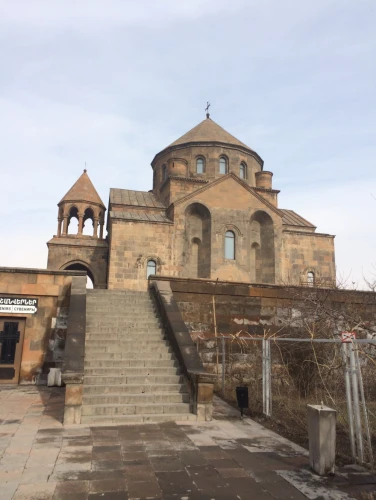

Saint Hripsime Church
A precisely balanced seventh-century shrine built over the traditional burial place of Saint Hripsime


Saint Hripsime Church is powerful because of structural clarity rather than abundant decoration. The present church was built in 618 under Catholicos Komitas I Aghtsetsi, replacing an earlier shrine. Church tradition places the burial of the virgin martyr Hripsime here, so the building is both an architectural monument and an active pilgrimage church.
First viewpoint: read the complete mass
Begin from the courtyard. Four apses, intermediate niches and corner chambers produce a compact, almost fortress-like exterior. The central dome rises without excessive display. UNESCO describes Hripsime as a perfect example of this four-apse church type; the property and its architectural influence are documented on the official UNESCO page.
Second viewpoint: stand at the centre
Inside, pause beneath the dome and look in four directions. The apses and entrances to the corner rooms show how a compact plan becomes a tall, concentrated interior. Do not touch stone surfaces, cross barriers or interrupt worshippers: this is an active church, not an architectural model.
Third viewpoint: shrine and tradition
The sanctuary below the altar is traditionally associated with Hripsime’s martyrdom and burial. Keep the securely dated building history distinct from religious tradition: both matter, but they answer different questions. Dress modestly, silence your phone and follow current photography instructions, especially during services.
Fourth viewpoint: build a coherent day
Allow 40–60 minutes. Combine the church with Etchmiadzin Cathedral and Zvartnots Cathedral. For another stop, use GAVAG’s Armenia attractions guide. Access can change during liturgies and feast days, so instructions from clergy and attendants take priority over a fixed sightseeing plan.
Frequently asked questions
Book a private transfer
Add this stop to your trip, see the full route on the map, and compare offers from local drivers.