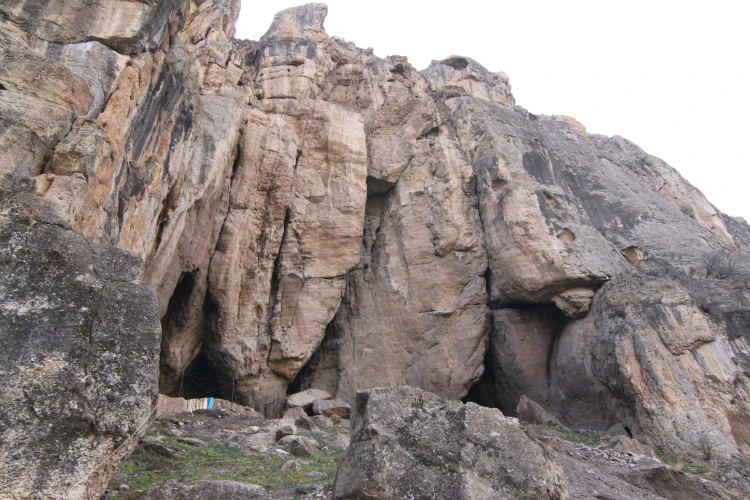
Areni-1 Cave
A Chalcolithic cave with evidence of early winemaking and footwear


Areni-1 Cave is an archaeological site near Areni village in the Arpa River canyon. It is also known in research as Birds’ Cave. Excavations show occupation and ritual activity during several periods. Visitors enter an active archaeological site, and the accessible displays represent only part of the cave and its research history.
Evidence from the winemaking area
In the first gallery, archaeologists found a plastered basin for pressing grapes, a receiving vat, fermentation and storage jars, grape seeds, skins and dried vine remains. Chemical analysis confirmed grape-related residues in vessels. Dated to about 4100–4000 BCE, it is often described as one of the earliest known complete wine-production complexes. The analytical results were published in the Journal of Archaeological Science.
Where is the 5,500-year-old shoe?
In 2008, archaeologists uncovered a lace-up shoe made from a single piece of leather. Radiocarbon dating placed it between 3627 and 3377 BCE. Grass survived inside, but researchers could not determine whether it provided insulation or preserved the shoe’s shape. The original is not displayed in the cave; it is held by the History Museum of Armenia. The study is available in PLOS ONE.
What the visit includes
The accessible route presents archaeological layers, preserved or reconstructed winemaking features and excavation information. Entry may follow a fixed route or require a guide. The floor is uneven in places, lighting is limited and the cave is cooler than outside. Wear closed shoes and remain behind protective barriers. Check current hours and tickets on the official Areni-1 website.
Planning the surrounding route
The cave lies between Areni village and Noravank Monastery, making all three practical in one day. Allow 45–60 minutes, with extra time for queues in summer and on weekends. Arrange any tasting separately at Areni Wine Factory or a village producer; wine tasting is not part of the archaeological visit.
Frequently asked questions
Book a private transfer
Add this stop to your trip, see the full route on the map, and compare offers from local drivers.