
Khosrov Forest State Reserve
A wild protected landscape of canyons, dry forests and old royal-reserve history


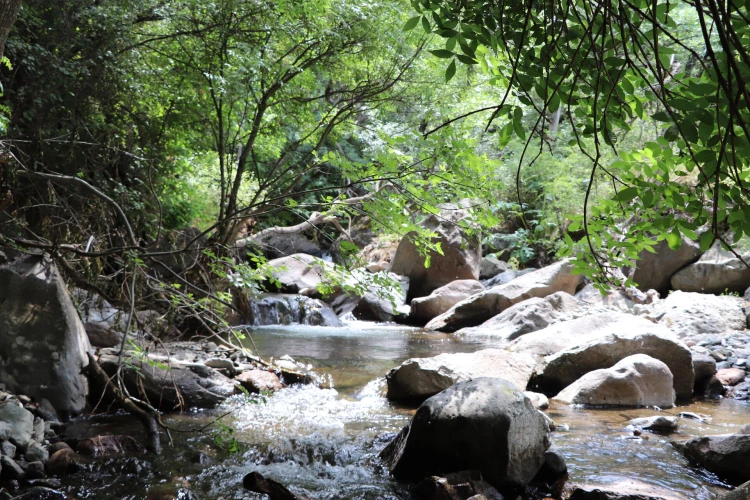
Khosrov Forest State Reserve protects a broad, rugged landscape rather than a single sightseeing point. Dry slopes, narrow canyons, juniper and oak woodland, open grassland and rocky ridges replace the familiar rhythm of monuments. A visit therefore needs a confirmed route, enough time and respect for reserve rules.
What kind of nature does the reserve protect?
The area is historically associated with King Khosrov Kotak, while the modern state reserve was established in the twentieth century. Changes in altitude and relief support semi-desert, steppe, woodland and mountain habitats. Spring brings softer colours, summer is hot and exposed, autumn offers clearer light, and winter requires careful preparation.
The reserve is also habitat for rare mammals and birds. Wildlife sightings are never guaranteed, and animals must not be approached or followed for a photograph. Binoculars are more useful than leaving the approved route, while a quiet group has a better chance of observing the landscape without disturbing it.
Access and choosing a route
Do not treat the reserve as an unplanned detour from Garni. Access conditions, permitted sectors, guide requirements and road conditions can change, so confirm them with the reserve administration before departure. Choose the route according to daylight, weather, the group’s fitness and the vehicle, not merely by the shortest line on a map.
Rules that are mandatory inside the reserve
Stay on the approved route and follow the guide or ranger’s instructions. Do not enter closed areas, light fires, leave waste, pick plants, remove stones, feed animals or use loud music. The protected landscape is the attraction itself, so leaving no trace is part of the visit rather than an optional courtesy.
What to bring and how much time to allow
Allow at least 3–5 hours for a meaningful visit, depending on the selected route and access point. Carry water, sun protection, closed shoes with good grip, a charged phone, a light layer and only compact food. Mobile coverage may be intermittent, so save essential directions and contact details offline.
What to combine with the trip
Depending on the approved entrance and available time, the wider route can include Garni Gorge or Azat Reservoir. Do not overload the same day: Garni Temple, Geghard Monastery and Havuts Tar each need their own time. Current background information is available from the Caucasus Nature Fund.
For photography, early morning or late afternoon gives the relief more depth and is usually more comfortable than midday. Weather matters more than a fixed shooting plan: haze, wind and sudden cloud can change visibility quickly. Photograph from safe, permitted points and never trade route discipline for a closer frame.
Frequently asked questions
Book a private transfer
Add this stop to your trip, see the full route on the map, and compare offers from local drivers.