
Saint Gayane Church
A 7th-century domed basilica best understood through proportion, changing light and living worship


Saint Gayane Church stands in Vagharshapat, a short distance southeast of Etchmiadzin Cathedral. It was built in 630 under Catholicos Ezra I over an earlier memorial chapel traditionally linked to the martyrdom of Gayane, the abbess who accompanied Hripsime and the other Christian virgins to Armenia. According to church tradition, Gregory the Illuminator founded the first chapel here in 301.
From the seventh-century church to the present complex
No historical source identifies a particular ruler or army that deliberately destroyed Saint Gayane. The church instead suffered gradual damage over many centuries. By the seventeenth century its walls, roof and upper sections required major work. Catholicos Philip I restored the damaged walls, drum and dome in 1652–1653. The Mother See’s history of the monastery notes that the appearance of the church before this restoration is not fully known.
In 1683, during the pontificate of Catholicos Yeghiazar I, a three-arched narthex was added to the west. Its side chapels were dedicated to the Apostles Peter and Paul, while the hall became a burial place for Catholicoi and senior clergy. The arched gate and monastic buildings around the church largely belong to the nineteenth century. Further conservation in the 1960s and 1970s renewed paving, replaced badly weathered stones and repaired the narthex roof without changing the essential medieval plan.
Architecture worth noticing
Saint Gayane is a four-column domed basilica: a long three-aisled hall leads toward the eastern apse, while a central dome rises above four supports. This combination of basilican space and a central dome became influential in Armenia and Western Asia. Beneath the main apse is the vaulted sepulchre associated with Saint Gayane. The church has formed part of the UNESCO World Heritage property since 2000.
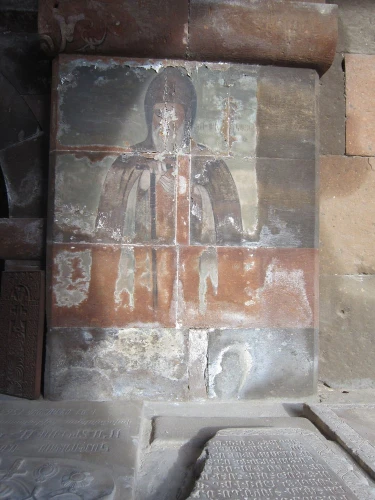
Inside, the architecture is more restrained than richly decorated. Look at the difference in height between the central and side aisles, the light beneath the dome and the fresco above the western entrance. As this is an active church, visitors should dress modestly, silence phones and avoid photographing worshippers or ceremonies without permission.
Planning a visit from Yerevan
About 45–60 minutes is usually enough for the church and courtyard. Continue on foot or by car to Etchmiadzin Cathedral; then compare Gayane’s basilican plan with the compact form of Saint Hripsime Church. On the road back to Yerevan, Zvartnots Cathedral is a logical final stop. Travellers arriving by air can combine the excursion with the Yerevan airport transfer service.
Frequently asked questions
Book a private transfer
Add this stop to your trip, see the full route on the map, and compare offers from local drivers.